From Africa
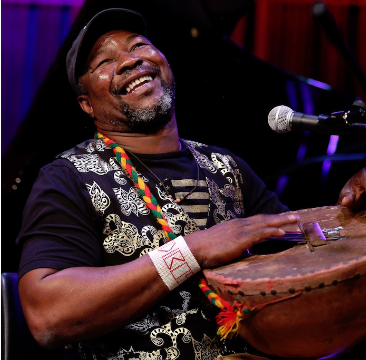
Abdoulaye Diabate (Mali, West Africa)
Kotchegna Dance Company(Ivory Coast, West Africa)
Tokounou (Guinea, West Africa)

From the Caribbean
Coco Merenson (Dominican Republic)
Retumba
Viento de Agua (Puerto Rico)
Vodou Drums of Haiti

From the Americas
Marcos Napa and Héctor Morales (Peru)
La Cumbiamba eNeYé(Colombia)
Los Macondos (Colombia)
Tahuantinsuyo (Andes Mountains)

From Asia
Sounds of Korea
Sachiyo Ito & Company (Japan)

From the Middle East
Members of Near Eastern Music Ensemble

From the Jewish Diaspora
& the Caucasus
Andy Statman Trio
Khevrisa
Shashmaqam (Central Asia)
Dancing Crane (Georgia)

From Europe
Cheres (Ukraine)
Merita Halili & The Raif Hyseni Orchestra (Albania)
Jerry O'Sullivan & Friends (Ireland)
Yuri Yunakov Ensemble (Bulgaria)

From the US
McCollough Sons of Thunder
Thunderbird American Indian Dancers
James Reams and the Barnstormers

GLOSSARY OF WORLD MUSIC TERMS

Bala: Xylophone from Mali. Original instrument of the jali.

Bomba: African-derived music and dance of coastal regions of Puerto Rico.

Bouzouki: Traditional string instrument of Greece.

Conga: Barrel shaped, single-headed hand drum from Cuba. Mainstay of Latin Caribbean percussion.

Charanga: Dance band music of eastern Cuba led by flute and violins.

Changgo: Double-headed hour glass drum of Korea. Used in both festival processions and classical stage music.

Cheres: A wide belt worn as a bullet proof vest in the Carpathian Mountains.

Cuatro: Guitar-like fretted lead instrument of Puerto Rico with four double courses of strings.

Djembe: Goblet shaped hand drum with metal resonators. Played in ensembles to accompany dance throughout West Africa.

Didjeridoo: An Australian aboriginal trumpet made from a eucalyptus branch.

Gagá: Carnival procession drumming and dance from the Dominican Republic. Related to Haitian Rará.

Güiro: Scraped percussion instrument from Cuba and Puerto Rico made of a gourd.

Güira: Metal variant of guïro from the Dominican Republic.

Klezmer: Instrumental music of the Jews of Eastern Europe (Ashkenazim).

Jali: Hereditary oral historian, musician and storyteller from the Mandinka culture of western Africa (pl. Jalilu). Also known as Griot.

Jíbaro: String instrument-based music and song from the mountain region of Puerto Rico.

Kayagum: Korean zither with movable bridges.

Koto:Japanese zither with movable bridges.

Maqam: Mode system of Arabic music with characteristic quarter tones scales.

M’bira: Hand-held instrument with tuned metal keys and gourd or wood resonator of the Shona people of Zimbabwe (also known as a thumb piano).

Merengue: Folk and popular music of the Dominican Republic. Played in a fast 2/4 meter with alternating stanzas and vocal or instrumental refrains, known as a jaleo.

Oud: Short-necked, fretless, plucked lute of the Arab world. The direct ancestor of the European lute (al'ud "the lute").

Plena: Percussion and song form of Puerto Rico using frame drums and improvised lyrics of social and political commentary. Also known as the "sung newspaper."

Raga: Mode system in Indian music with characteristic patterns, performance time, and mood.

Rom: Indigenous term for Gypsy culture.

Salsa: Popular hybrid of Cuban son music and percussion, and North American jazz instrumentation. Developed in New York City and popularized throughout Latin America

Sangen: Three-string instrument of Japan, used in many different styles of traditional music including Kabuki, Bunraku, and Jiuta.

Shakuhachi: End-blown, traditional bamboo flute of Japan. Associated with Zen Buddhism.

Sikus: Pan pipe of Altiplano highland indigenous culture of South America.

Son: Song style of eastern Cuba characterized by string accompaniment of guitar and related instruments such as the tres.

Step Dance: Percussive solo dancing, using rapid heel and toe movements to the rhythms of Irish jigs, reels and hornpipes.

Uilleann Pipes: Bellows-driven bagpipe of Ireland.

 
Contact: Kaisha Johnson 212.571.1555 x23


CTMD
touring artist home
Return to Touring Artists Home